
Wood production and biodiversity conservation can be organised in different ways across a forest landscape. Some areas may have one dominant objective, while others are managed for several objectives at the same time.
Our latest Teaming Up 4 Forests study, Productive and Biodiverse: Managing Europe’s Forests for Economic and Ecological Outcomes, examines how these approaches can be combined in practice. It distinguishes between segregation, where areas are managed for different dominant objectives, and integration, where biodiversity conservation and wood production are pursued on the same land. The study treats these approaches as a spectrum rather than mutually exclusive choices, with the appropriate balance depending on scale, ownership and policy context.
Managed forests are part of the same ecological landscape
Around two-thirds of European forest area supplies wood. These forests also form part of the landscape in which biodiversity is maintained.
The study describes forests outside strict reserves as a surrounding matrix that can provide habitat and connect areas of high conservation value. Biodiversity measures within production forests can therefore complement areas where conservation is the primary objective.
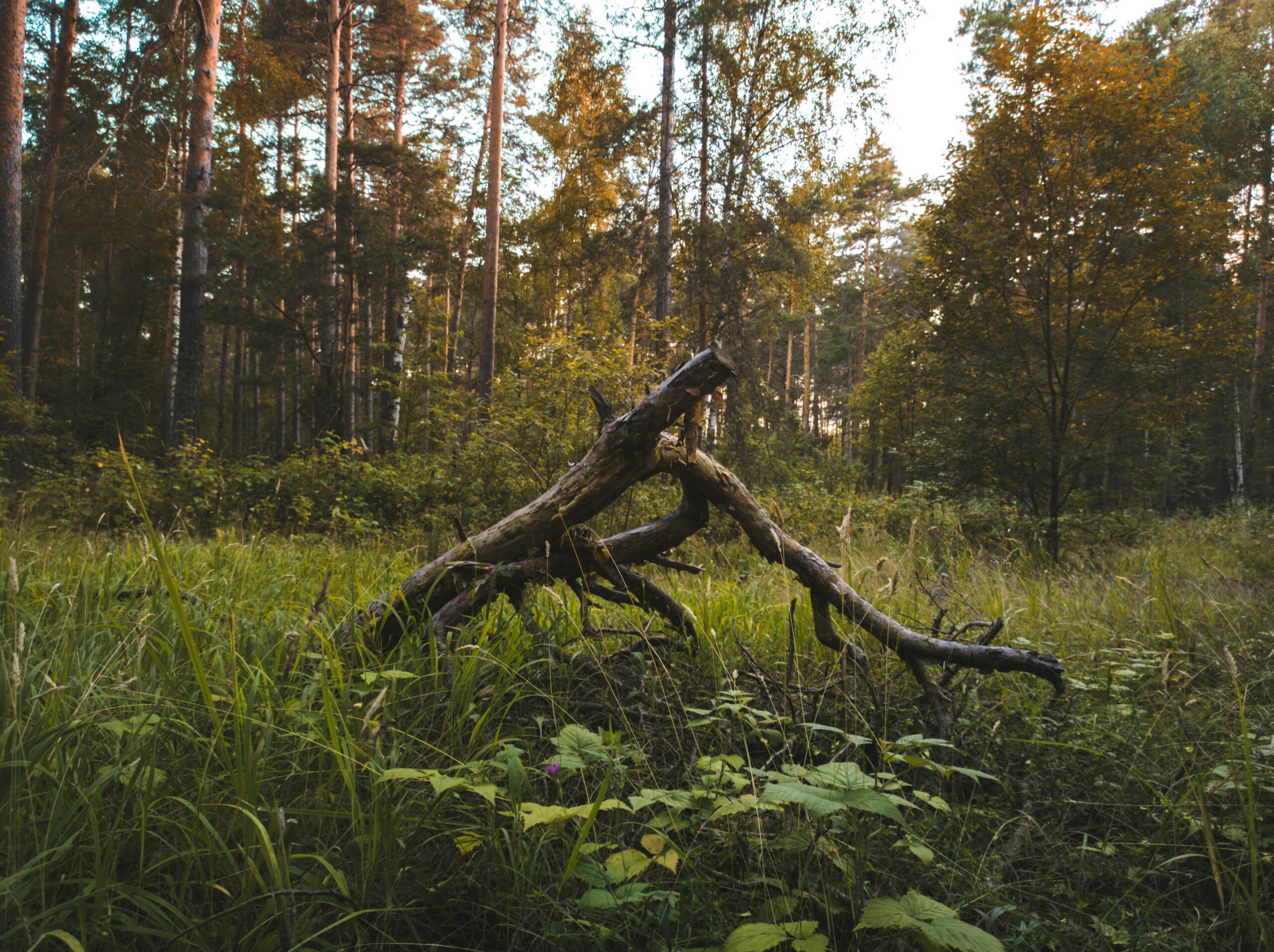
This can include retaining habitat trees and deadwood, protecting valuable habitat patches and maintaining structural diversity within managed forests. Strictly prohibited areas may be left unmanaged so that natural forest dynamics can continue.
The roles are different, but they are connected. Conservation and wood production therefore need to be considered across the same landscape rather than planned independently of one another.
Different species need different conditions
A landscape approach also reflects the fact that forest species do not all require the same habitat.
Some depend on large trees, deadwood, and long periods of habitat continuity. Others need more open conditions. The study identifies canopy openings as important habitat for groups including butterflies, hoverflies, and some ground-nesting birds.
No single forest structure can provide all of these conditions equally well. Maintaining a range of habitats therefore requires variation between places and over time.
Integrative Forest Management provides one framework for coordinating that variation. It can bring together forests managed for several objectives, strict reserves, specialist habitat patches, retained habitat trees and deadwood, open habitats and areas where wood production is the main function. The mix is not fixed. It can be adapted to local ecological conditions, ownership patterns, and management objectives.
Different combinations can be compared
The study also reviews evidence on the ecological and economic consequences of combining different management approaches.
For forest owners and managers, this means that improving habitat outcomes may involve a real economic trade-off. Applying these approaches in practice will depend partly on whether owner expected returns can be accommodated within the wider management and economic context.
These figures describe one modeled landscape and cannot be applied as a European benchmark. They do, however, show how ecological and economic outcomes can be assessed together when management is considered across a wider area.
There is no single arrangement that will suit every forest landscape. The study instead points towards a diverse set of management approaches, coordinated across different spatial scales.
For forest managers, businesses and policymakers, the practical question is therefore not simply which areas should be used for conservation and which for wood production. It is how those different roles can be combined across a landscape, where they can support one another, and where trade-offs remain.
Explore the full Productive and Biodiverse study and its findings here
