Our news and events

Discover our science-business activities

forest-landscape-ireland-gw

Knowing how a forest could be managed for biodiversity, wood production and other functions does not mean those choices will happen in practice. Forest owners and managers make decisions within a wider system. Rules determine what they are permitted or required to do. Economic and other incentives affect which options are realistic or attractive. Research,...
Share on:
Unsplash_Raquel_Smith

A resilient forest is not simply one that survives disturbance or returns to a previous condition. Stability can come from the forest’s own ecological processes, allowing it to absorb disturbance and recover. But it can also be maintained through repeated management intervention designed to protect a particular forest condition or level of wood production. Both...

Share on:
Unsplash_Andrew_Reshetov

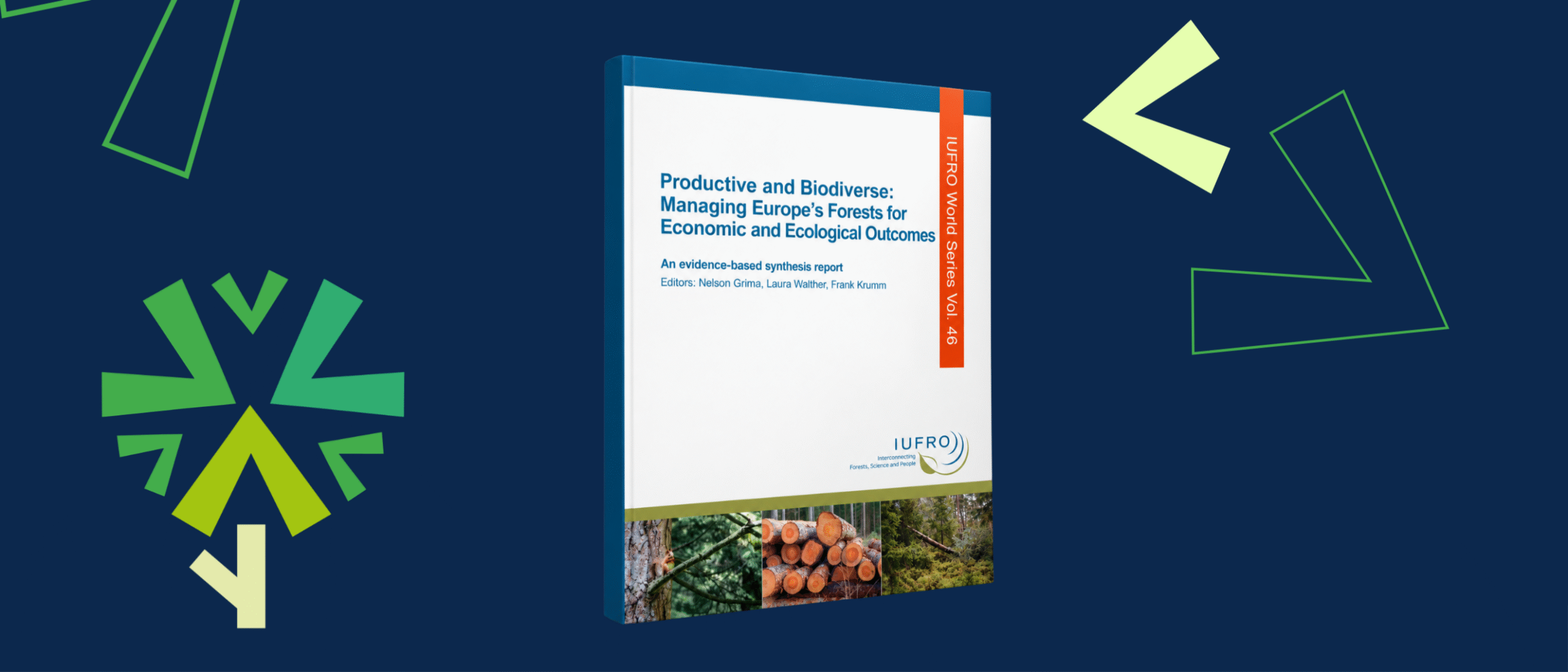
Wood production and biodiversity conservation can be organised in different ways across a forest landscape. Some areas may have one dominant objective, while others are managed for several objectives at the same time. Our latest Teaming Up 4 Forests study, Productive and Biodiverse: Managing Europe’s Forests for Economic and Ecological Outcomes, examines how these approaches...

Share on:
Unsplash_Taylor_Finklea

There is no single measure of forest biodiversity. Species counts can give us an indication, but biodiversity also includes genetic variation, the structure of forests and the ecological processes taking place within them. A measure that captures one part of that picture may tell us relatively little about another. That makes measuring change more demanding...

Share on:
Unsplash_Kristaps_Ungurs

Forests provide many things at once. They supply wood, store carbon, regulate water, protect against natural hazards and soil erosion, support biodiversity and provide space for recreation. But not every one of these functions can be maximised in the same place at the same time. Sustainable forest management recognises the ecological, economic and social functions...

Share on: